
Overview
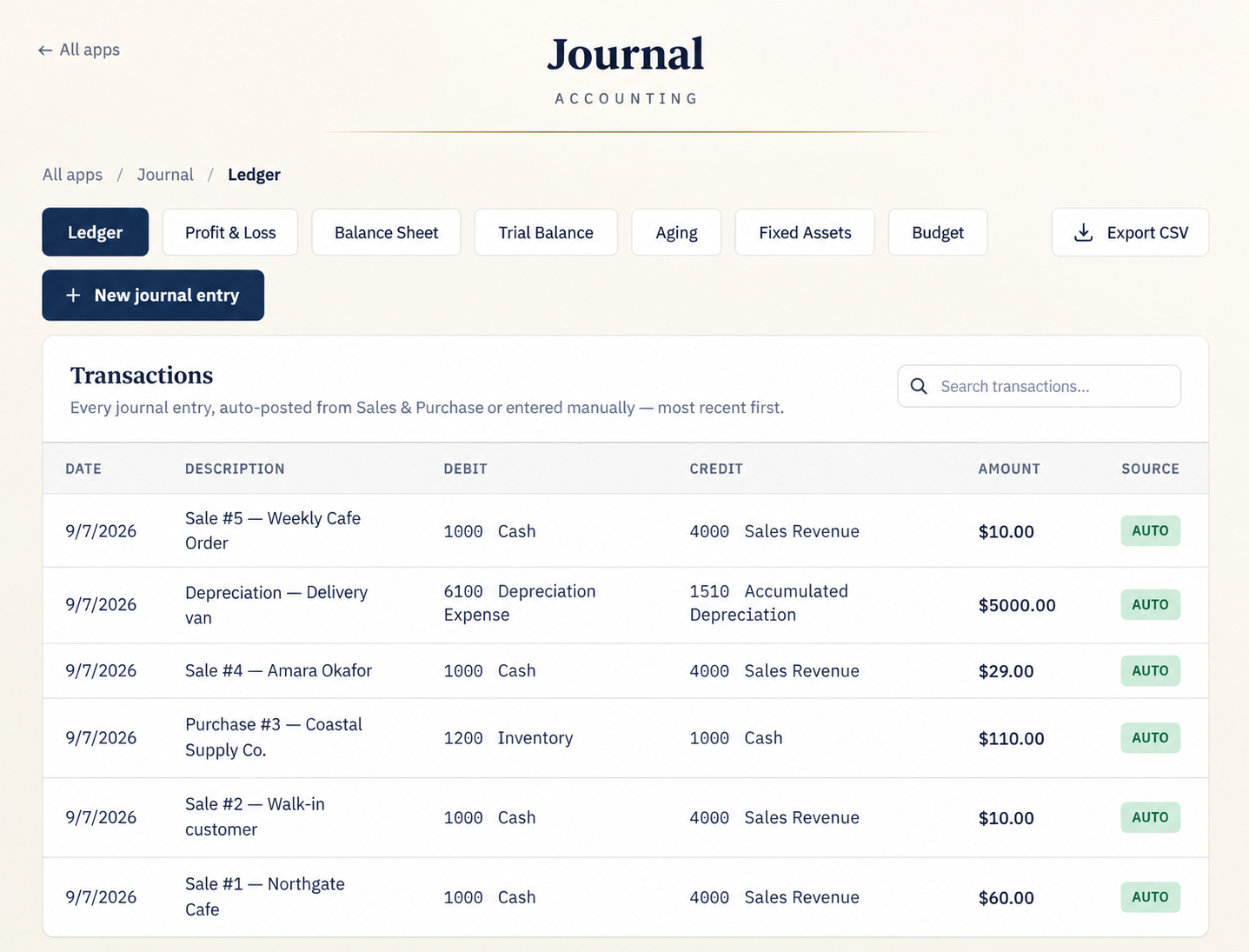
Double-entry bookkeeping that runs itself. Every sale, purchase, and depreciation entry lands in the ledger automatically — debits and credits always balance, because the system won’t let them not.
Problem
Small businesses either avoid bookkeeping until tax time or pay for accounting software built for accountants, not shop owners. Manual books drift out of balance, financial statements go stale, and nobody can answer “are we actually profitable this month?” without a spreadsheet marathon.
That approach breaks down in predictable ways:
- Manual ledgers drift out of balance and nobody notices until year-end
- P&L, balance sheet, and trial balance live in three different places (or nowhere)
- Fixed assets get bought and forgotten — no depreciation tracked
- Overdue invoices and bills pile up with no aging view to chase them
Approach
Journal posts every transaction as a proper double-entry the moment it happens elsewhere in the suite — a credit sale in Orderly debits Accounts Receivable and credits Sales Revenue automatically. On top of that auto-posted ledger sit the reports a real business, and its accountant, actually reads.
The solution included:
- Auto-posted journal entries from Sales & Purchase, tagged apart from manual entries
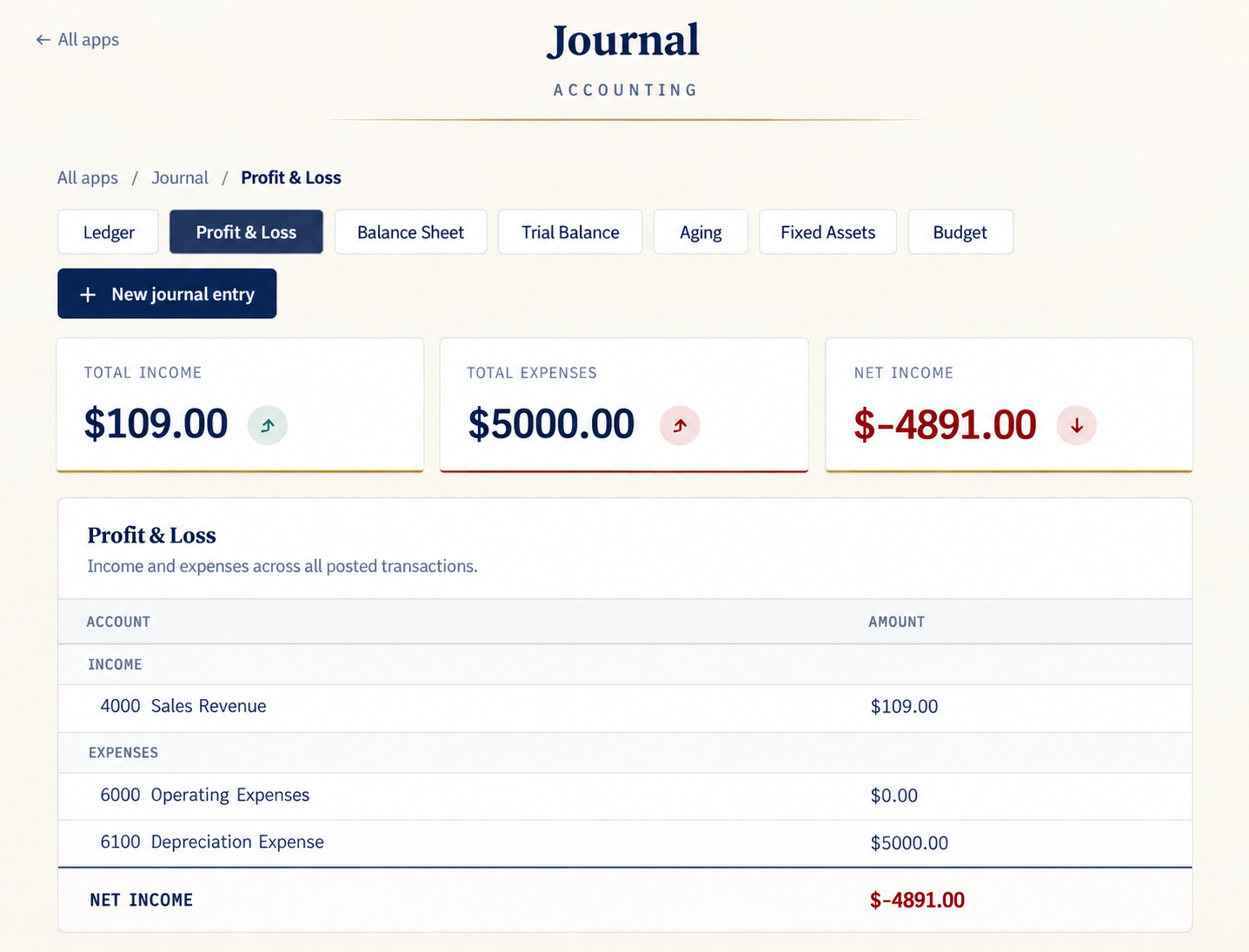
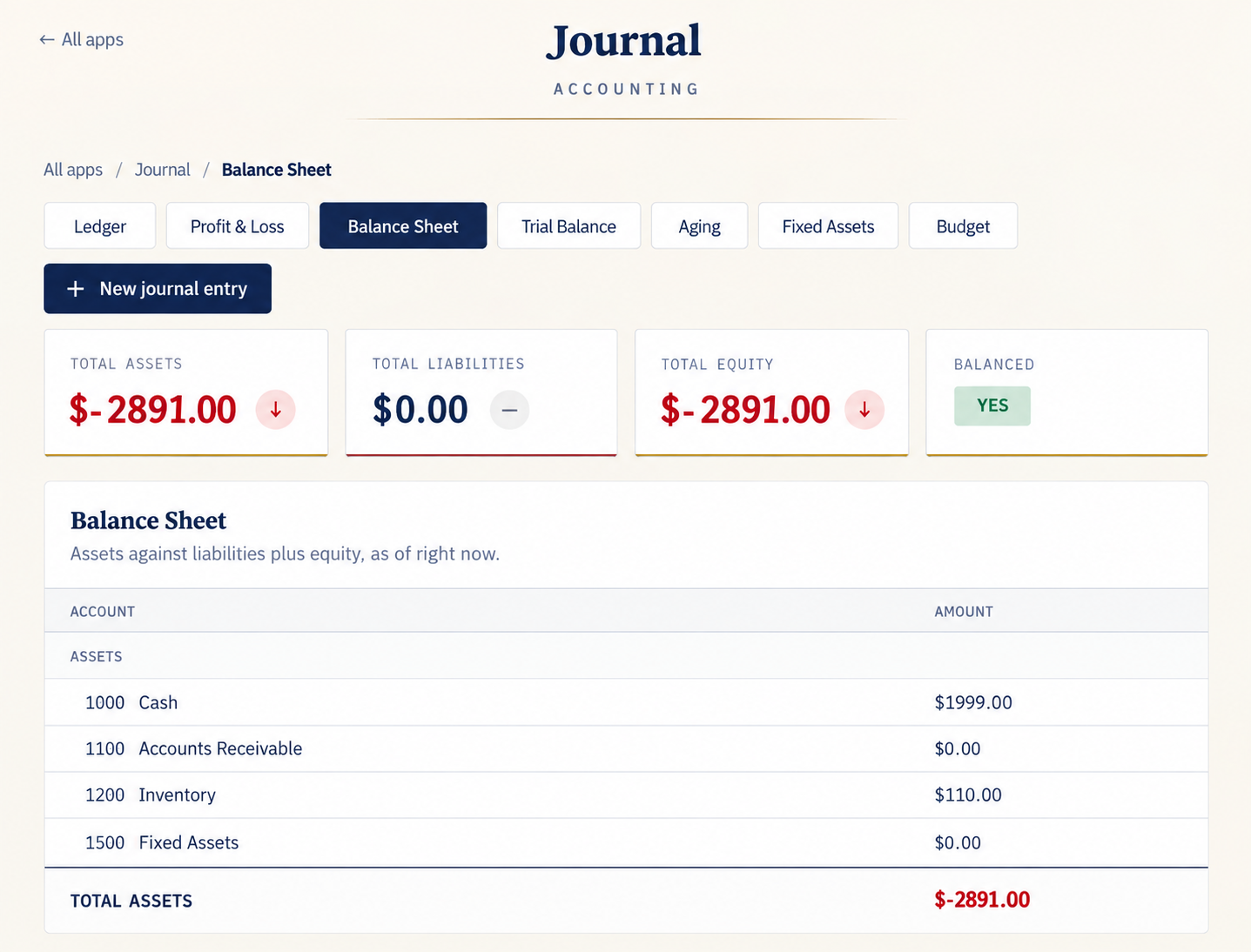
- Live Profit & Loss and Balance Sheet
- Trial Balance with a running balanced / out-of-balance check
- Fixed asset register with straight-line depreciation, posted in one click
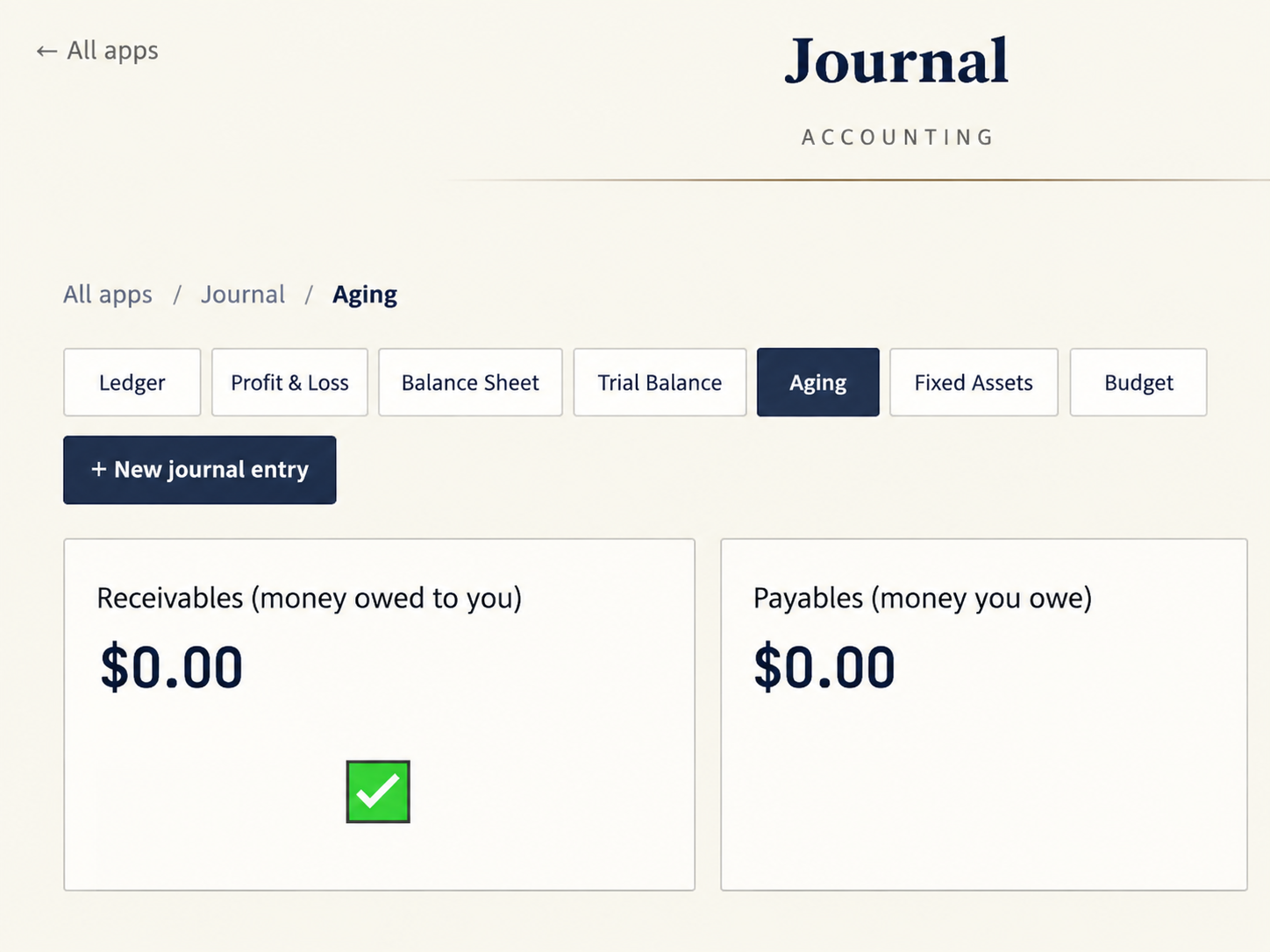
- Receivables/payables aging by bucket (current, 31-60, 61-90, 90+)
- Budget vs. actual by account and period, with variance %
Outcome
What it delivers:
- Books that can’t drift out of balance — every entry is forced debit = credit
- One-click financial statements instead of a spreadsheet rebuild
- Depreciation that posts itself instead of getting forgotten
- A live answer to who owes you, and how late they are